
Dental care · Dogs and cats
Veterinary Dental Care for Dogs & Cats in North Edmonton
Dental problems aren't always obvious. Pets often keep eating even when their mouth hurts. A dental assessment shows what's happening above and below the gumline, and what your options are.
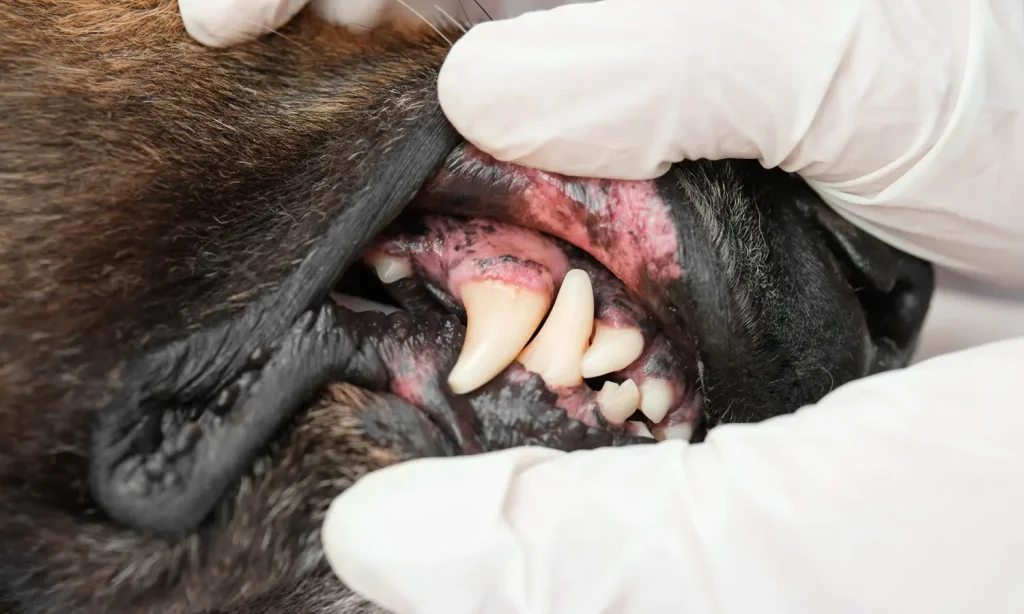
Signs to watch for
How to tell if your pet's mouth needs attention.
Dental disease can be painful, and pets are good at hiding it. These signs are worth a visit.
Bad breath
Persistent odour can point to infection or dental disease.
Red or swollen gums
Inflamed gums are an early sign of gum disease.
Tartar buildup
Yellow or brown deposits on the teeth near the gumline.
Loose or broken teeth
Fractured or wobbly teeth can be painful, even if your pet keeps eating.
Drooling or dropping food
Changes in how your pet chews or holds food.
Reluctance to chew
Avoiding hard food or toys, or pawing at the mouth.
If your pet has a swollen face, can't eat or seems to be in severe pain, call us right away at 780-475-9912.
Below the gumline
Much of dental disease is hidden.
Most of a tooth sits below the gumline, where we can't see it by eye. Dental X-rays show roots, bone and problems that a visual exam can miss.
With that information we can recommend treatment based on what's actually going on, and explain it to you.
What dental X-rays can show
Tooth roots and root infections
Bone loss around teeth
Retained roots or hidden fractures
What to expect
What happens at a dental appointment.
Each pet's plan is different. This is the usual path.
Examination
We look at your pet's mouth and overall health.
Assessment and estimate
We explain what we find, what's recommended and what it may cost.
Anesthesia and monitoring
When a cleaning or treatment needs it, your pet is anesthetized and monitored.
Cleaning and dental X-rays
Teeth are cleaned and X-rayed so we can see the whole tooth.
Treatment if needed
If problems are found, we talk with you about treatment options before going ahead.
Recovery and home care
You go home with instructions for recovery and for caring for your pet's teeth.
Ready for a dental assessment?
Book online or call us. We'll look at your pet's mouth and explain what we find and what your options are.
Costs and estimates
How we work out the cost of dental care.
Every pet's mouth is different, so costs vary. After the assessment, we give you an estimate and explain what's recommended and why, before anything is done.
If we find problems during the procedure, such as a tooth that needs removing, we'll talk through the options with you.
What can affect the estimate
Your pet's size, age and health
Pre-anesthetic testing, if advised
The amount of tartar and disease
Dental X-rays
Extractions or other treatment if needed
Questions
Dental care FAQs.
Does bad breath mean dental disease?
Often, but not always. Persistent bad breath is a good reason to have your pet's mouth checked.
Why is anesthesia used?
Anesthesia lets us clean below the gumline, take X-rays and treat problems safely and without pain or stress. We assess your pet's health first and monitor them throughout.
What do dental X-rays show?
They show tooth roots, bone and problems below the gumline that can't be seen by eye.
How do you determine treatment costs?
After the assessment we give you an estimate based on what your pet needs. We'll talk with you before any extra treatment.
What if teeth need to be removed?
If a tooth is badly diseased or damaged, removing it may be the best way to relieve pain. We'll explain why and discuss it with you.
How can I care for my pet's teeth at home?
Regular tooth brushing and veterinary-recommended products can help. Ask us what suits your pet.
Help your pet feel better.
Daytime appointments are Monday to Friday, 8 AM–6 PM. Book online or call us.